
Why We Say “No” to Faux Wood Driveway Gates
Real World Case Study: The “South-Facing” Trap
Documented Timeline: Faux Wood Finish Failure (May 2025)
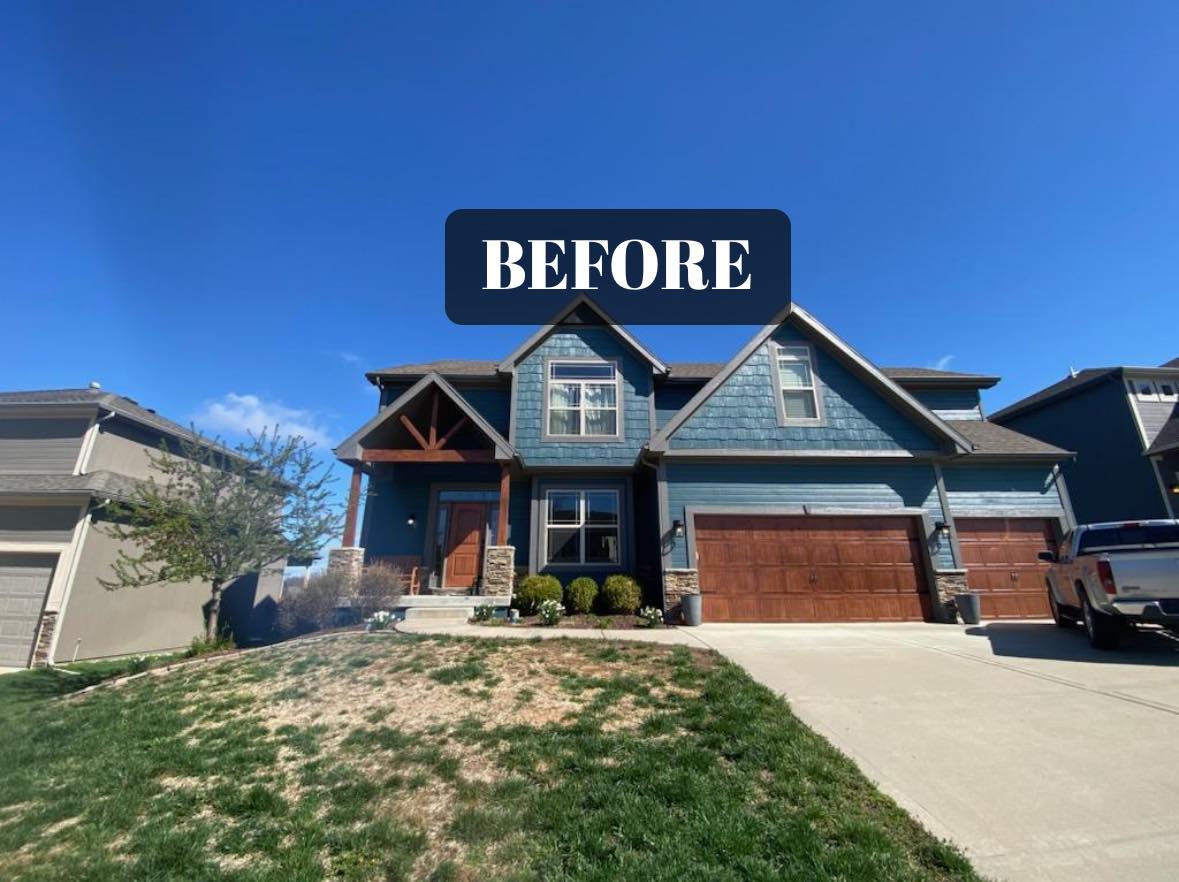
Rich, warm wood tones with a high-gloss clear coat.
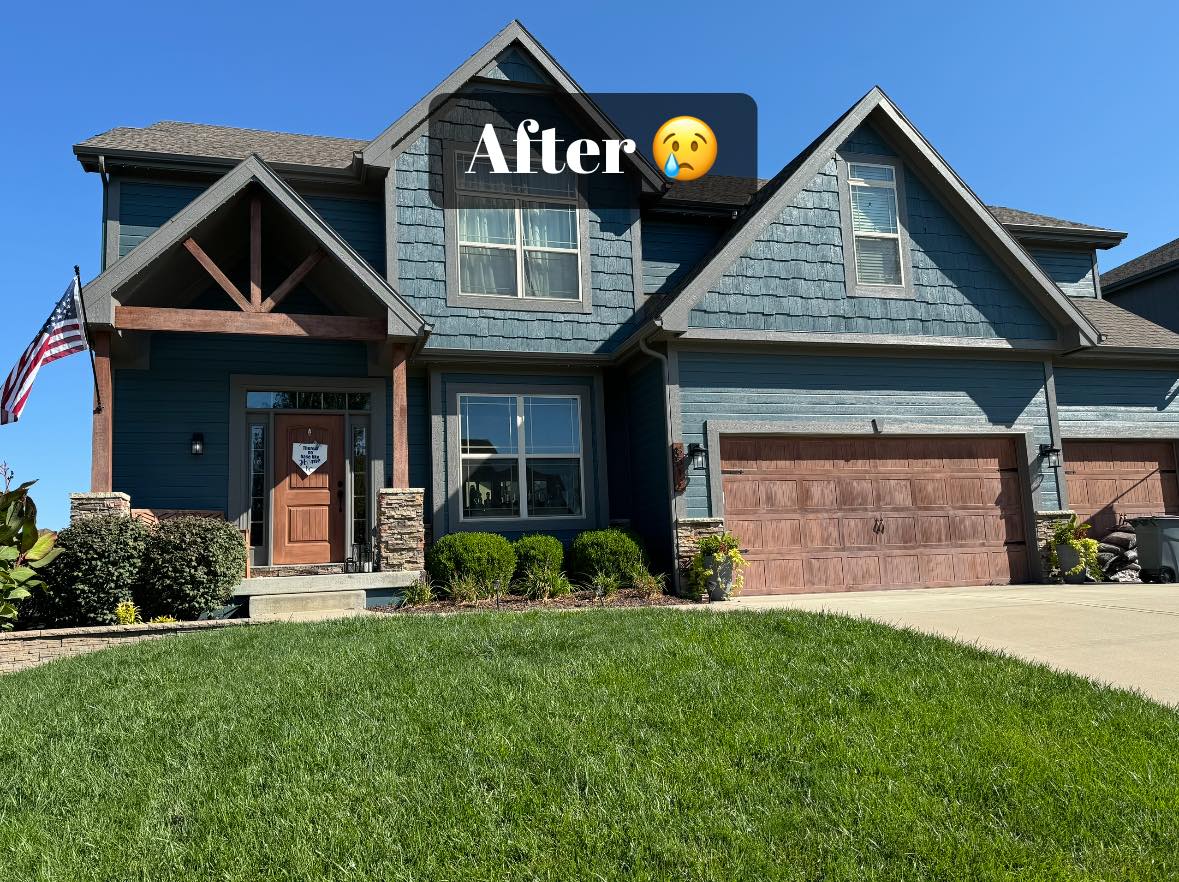
Clear coat delamination and complete pigment failure.
What went wrong here?
1. The “South-Facing” Excuse:
As confirmed in the homeowner’s report, the painter refused to warranty this job because the home faces South. The intense UV exposure caused the organic red and yellow pigments (used to create the “cedar” look) to break down in less than a year.
2. The “Liquid Paint” Weakness:
The homeowner confirmed: “It is not stain! This was painted then an antiquing glaze… then clear coated.” Because liquid clear coats cure by evaporation, they leave behind microscopic pores. The sun destroyed the bond, causing the clear coat to peel off in sheets.
3. The Impossible Repair:
Because the faux grain is an artistic layering process, it cannot be touched up. The contractor’s only solution was to “paint it one solid color,” completely destroying the premium look the homeowner paid for.
The “Instagram” Trap: Why Faux Wood is Trending
We get asked almost every week: “Can you build me a metal gate that looks like wood?” We understand the appeal. Faux wood (painting aluminum or steel to look like cedar or mahogany) offers a warm, rustic aesthetic without the risk of rotting lumber.
But that look comes at a staggering cost. Competitors often charge a massive premium for this finish—pushing the price of a gate from $20,000 to over $30,000. You are paying a $5,000 to $10,000 markup just for a paint job that is chemically destined to fail.
It looks beautiful on day one. But as a company that has stood behind our work since 2011, we are more concerned with Day 1,000. We turn these jobs down for one simple reason: The liquid paint technology required to create that “wood look” does not meet our engineering standards for durability.
The “Science of Failure”: Why Liquid Paint Can’t Compete
Competitors who sell faux wood gates rely on water-based industrial enamels to achieve that “hand-painted” grain look. They might claim it is “high performance,” but the data sheets tell a different story.
We compared the technical specs of a standard Industrial Water-Based Enamel (often used for faux finishes) against the Super Durable Polyester Powder we use on every JDR gate.
1. The Scratch Test (Pencil Hardness ASTM D3363)
A driveway gate takes a beating from tree branches, road debris, and landscaping equipment. The industry measures toughness using the Pencil Hardness Test.
- Faux Wood (Liquid Paint): Rated HB.
- The Reality: HB is soft. A fingernail, a dry tree branch, or a dog’s claw can cut right through the clear coat, exposing the delicate grain work underneath.
- JDR Powder Coat: Rated 2H (Minimum).
- The Reality: 2H is “Architecture Grade.” It is significantly harder than liquid paint. It takes a sharp metal object to break the surface.
2. The Rust Test (Salt Spray ASTM B117)
This is the most critical test for a driveway gate. Engineers blast the metal with a hot, salty fog until it rusts.
- Faux Wood (Liquid Paint): Often fails after 72 Hours.
- The Science: Liquid paint cures by evaporation. As the water leaves the paint, it leaves behind microscopic tunnels called micropores. Humidity travels right through these tunnels to the steel, causing rust to bubble up from underneath the paint.
- JDR Powder Coat: Passes 3,000+ Hours.
- The Science: Our powder is baked at 400°F. It doesn’t dry; it fuses. The powder melts into a solid, cross-linked plastic shell that is chemically impermeable to water. That is 40x more protection.
The “Pink Gate” Phenomenon (UV Chemistry)
Have you ever seen an old faux wood gate that looks pink, orange, or gray? That isn’t a mistake; it’s chemistry.
The Pigment Problem To create the “Warm Cedar” or “Oak” color, painters must use specific Red and Yellow organic pigments.
- The Failure: Any chemist will tell you that Organic Red/Yellow pigments are the most unstable colors in existence. UV rays break their molecular bonds (“bond cleavage”) faster than any other color.
- The Result: After 2–3 years of sun exposure (especially if your gate faces South or West), the warm wood tones vanish, leaving a washed-out, unnatural pink hue.
The JDR Difference: We use Inorganic Ceramic Pigments in our solid colors. They are derived from metal oxides (like stone) and are chemically incapable of fading the way organic dyes do.
The “Refinishing” Nightmare (The $5,000 Mistake)
This is the part nobody tells you until it’s too late. You cannot touch up a faux wood gate.
Because the finish is a complex, multi-layered artistic application, you cannot simply “paint over” a scratch.
- The Problem: If a delivery truck scratches your gate, or a weed eater chips the bottom rail, the damage is permanent. You cannot blend a single color into a wood grain pattern.
- The Only Fix: You must pay to have the entire gate sandblasted down to bare metal and hire an artist to re-paint the entire grain pattern from scratch.
- The Reality: Homeowners come home one day and realize their gate looks nothing like it did when it first arrived. They decide to paint over their $30,000 “Faux Wood” gate with a $50 bucket of black paint just to hide the failed coating.
The JDR Solution: Integrity Over Trends
We don’t chase trends; we chase longevity. We exclusively use Super Durable Polyester Powder Coating.
- Thermal Fusion: We bake the gate at 400°F. The powder melts and fuses into a solid, impenetrable plastic shell. No pores. No peeling.
- Infinite Options: We offer over 6,000 powder coat colors.
- Want a rustic look? We have Textured Bronze or Veined Copper.
- Want a natural look? We have Moss Green or Earth Tone mattes.
- Texture = Strength: Textured finishes hide fingerprints, resist scratching, and stand up to weed eaters far better than any smooth liquid paint.
| Feature | Faux Wood (Liquid Paint) | JDR Super Durable Powder Coat |
| Price Premium | $5,000 – $10,000 Markup. | Standard Pricing. |
| Hardness (ASTM D3363) | HB (Soft). Scratches easily from branches and claws. | 2H (Hard). Resists abrasion and impact. |
| Salt Spray (ASTM B117) | ~72 Hours. Micropores allow moisture to penetrate. | 3,000+ Hours. A fused, waterproof plastic shell. |
| UV Stability | Poor. Red/Yellow pigments fade to Pink/Gray quickly. | Extreme. Inorganic pigments hold color for decades. |
| Freeze/Thaw | Cracks. Moisture expands in pores, “popping” the paint. | Flexible. Engineered to withstand temp swings. |
| Repairability | Impossible. You must strip and repaint the whole gate. | Easy. Standard touch-up paint blends seamlessly. |
| Warranty | Limited/Non-Existent for the finish itself. | Comprehensive. We stand behind our finish. |
The Better Alternative: Achieve the “Rustic” Look (Without the Risk)
Just because we say no to “Faux Wood” doesn’t mean you are stuck with plain black.
We specialize in Textured and Veined Powder Coats that offer the depth, warmth, and character of an organic material, but with the armor-plated strength of industrial polyester.
Our Top “Wood Alternative” Finishes:
- Veined Copper: A rich, dark hammer-tone that mimics the look of aged metal or dark stained wood from a distance.
- Textured Bronze: A deep, earthy brown with a gritty texture that catches the light and hides dust/dirt perfectly.
- Oil Rubbed Bronze: A classic, timeless finish that pairs beautifully with stone pillars and timber-frame homes.
These finishes don’t try to “trick” the eye with a fake wood grain. Instead, they offer an authentic, high-end metal aesthetic that commands respect.
Ready to Build a Legacy?
Don’t settle for a “trendy” finish that underwhelms after a handful of years. Build a gate that will still look incredible when your grandbabies are driving through it.